Picking the perfect fabric for your space

Choosing fabric for roller blinds or awnings isn’t just about colour or looks — it also affects the atmosphere, the view, the heat inside the room and your energy savings. Choosing the right fabric is the starting point for a space that works efficiently and meets your needs.

Getting to know sunscreen fabric

Most sunscreen fabrics are made from polyester combined with PVC using a Extrusion process, in which PVC plastic is extruded around the fibres, which are then woven into fabric before going through Finishing so the fabric holds its shape without sagging, and is strong and resistant to sunlight and heat.

What is openness?

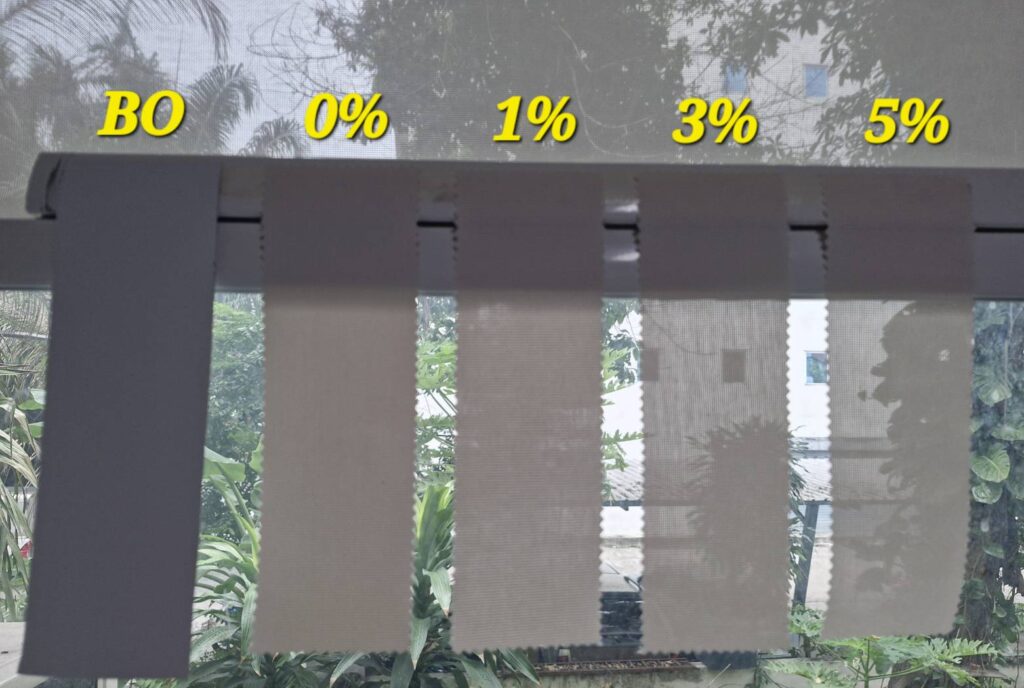
Openness It is the spacing between the yarns in the weave (how open the fabric is), measured as a percentage:

  • The higher the percentage, the more open the fabric — a clearer view out and more light in.
  • A lower percentage gives more privacy and less light — ideal for spaces that need protection from heat or glare.

For example:

  • 5% openness: clear view, moderate light
  • 1% openness: excellent sun protection, ideal for studies or very hot spaces
Comparing the openness of different fabrics

Comparing the openness of different fabrics

How does colour affect it?

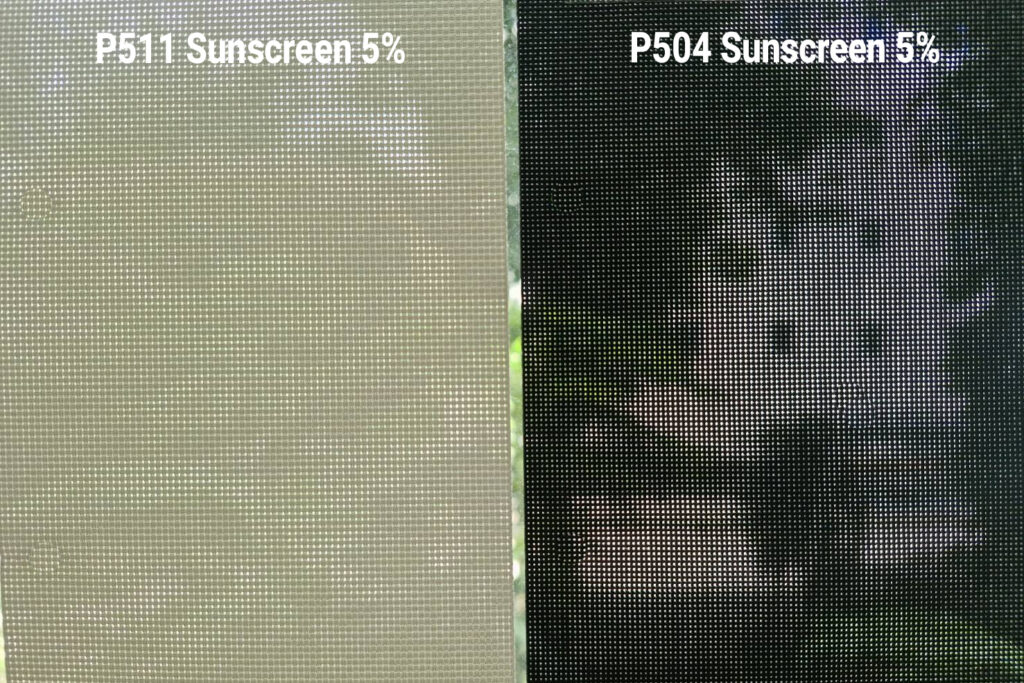
  • Dark colours: better sun protection and less glare, while still giving a clear view out
  • Light colours: feel open and airy, and are good at reducing heat build-up
Light vs. dark sunscreen fabric compared, both at 5% openness

Light vs. dark sunscreen fabric compared, both at 5% openness

The 2 most popular sunscreen weaves

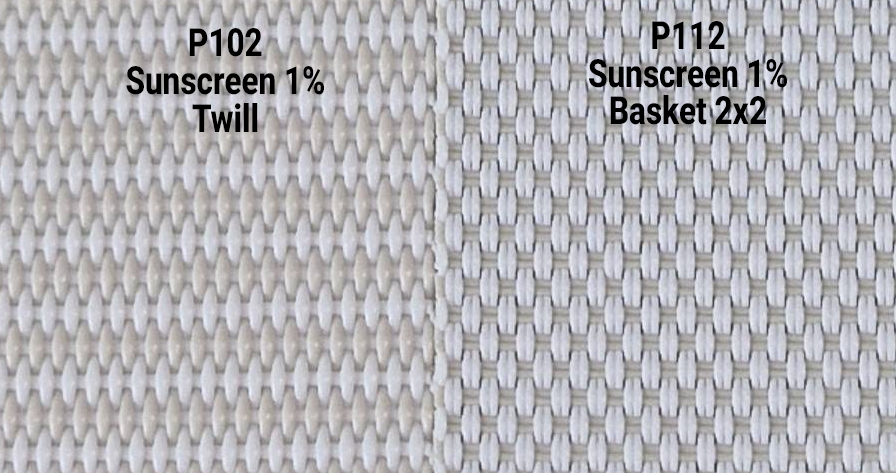
  • 2×2 Basket Weave – a grid weave: strong, elegant, easy to see through. Ideal for spaces that want openness, such as homes or offices.
  • Twill Weave – a diagonal weave with depth and a clear texture for a premium look. Ideal for cafés or design-led spaces.

Even at the same openness, e.g. 3%, a basket weave is easier to see through than a twill because of the fibre direction and the more even distribution of openings.

The weaveaffects the overall feel of a space — fine weaves feel luxurious, plain weaves feel simple and clean.

Twill vs. basket 2x2 weave compared, both at 1% openness

Twill vs. basket 2×2 weave compared, both at 1% openness

Starboard Design’s sunscreen range includes A310, A500, P000, P100, P110, P310, P320, P500, P510, P530, P540, P550, Z500 and Z300

How is outdoor sunscreen different from ordinary sunscreen fabric?

The key difference lies in the finishing process.

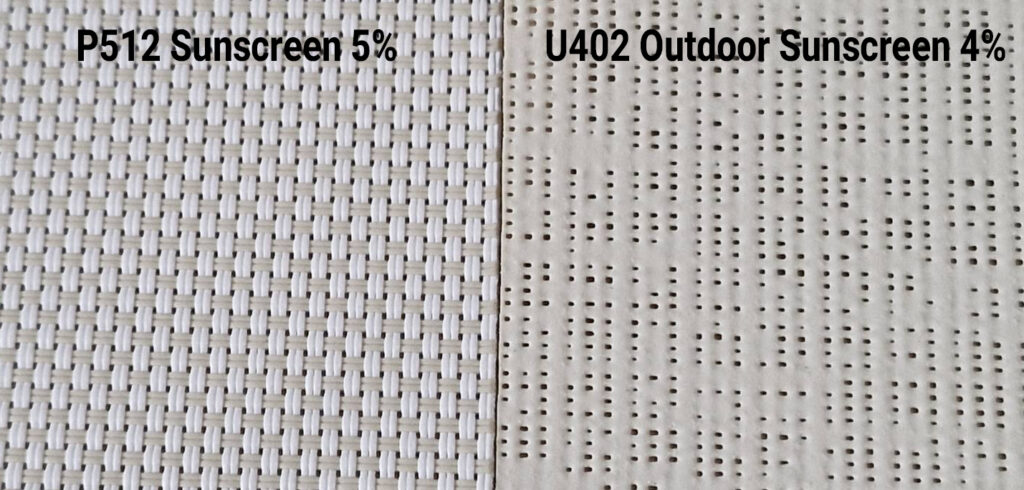
Outdoor Sunscreen It is coated with full-surface PVC after weaving, so the surface becomes one continuous material across the whole piece. As a result:

  • when it is pulled or starts to tear, the whole fabric structure shares the load

  • the fabric is stronger and resists tearing and wind better

  • the surface is smooth, even and looks more premium

Meanwhile, ordinary sunscreen fabric is yarn-coated before weaving, so the surface still shows the individual crossing yarns:

  • if a tear starts, the force falls on only the yarns being torn, so it keeps tearing easily

  • not suitable for outdoor use with wind, sun, rain and sudden gusts

Close-up comparison of ordinary sunscreen and outdoor sunscreen

Close-up comparison of ordinary sunscreen and outdoor sunscreen

Starboard Design’s outdoor sunscreen range includes U400, U5350

Dim-out vs. sunscreen — which should you choose?

When choosing roller blind fabric, many people confuse dim-out and sunscreen fabrics because both are used to control light — but in fact their properties are clearly different.

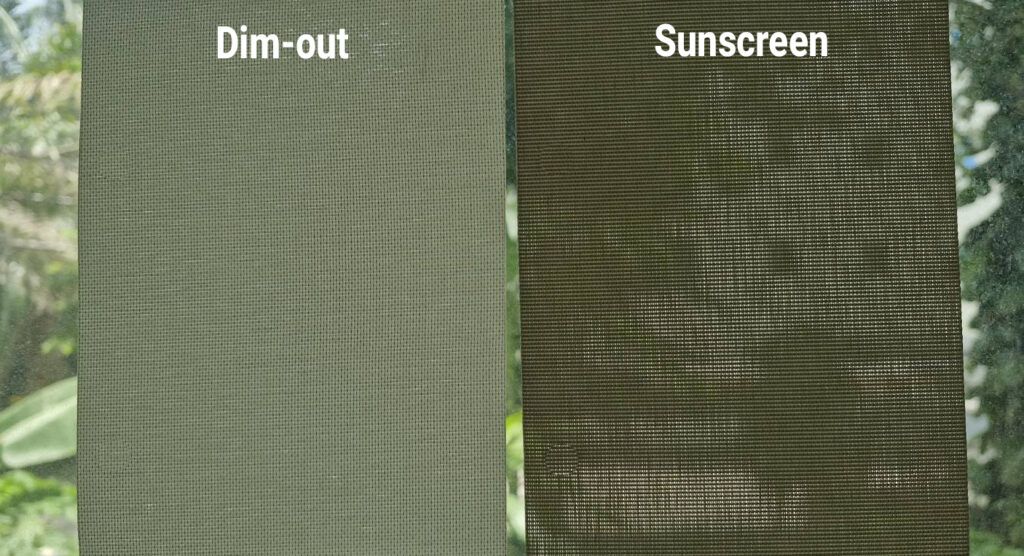
Dim-out fabric blocks the view but not all the light. From outside you can’t see in, while natural light still comes through to a degree, giving a soft feel and reducing glare much like frosted glass.

On the other hand, sunscreen fabric is designed to be seen through, giving a clear view outside while blocking part of the light. It comes in several openness levels such as 1%, 3% or 5% — the lower the value, the more sun it blocks. Sunscreen fabric filters glare and UV well while still letting natural light into the room, so the space feels open, airy and connected to the outside. Ideal for public spaces such as restaurants, cafés, showrooms and living rooms.

If you want a calm, private atmosphere without an outside view, dim-out fabric is the right choice.
But if you want an airy feel, a view and natural light without glare, sunscreen fabric is the better fit.

Dim-out vs. sunscreen fabric compared

Dim-out vs. sunscreen fabric compared

Starboard Design’s dim-out range includes M240 and M250

Blackout fabric — understand it properly before you choose

Blackout fabric is designed to block 100% (or nearly 100%) of light so a room becomes completely dark — ideal for bedrooms, hotels, meeting rooms or any space that needs complete light control. There are several types of blackout fabric on the market, each with clearly different manufacturing processes and performance properties from the others.

1. Multi-layer coated blackout

How it’s made:
fibres are woven into an internal skeleton of fibreglass or polyester, then coated with PVC or polyester in 3–4 layers on both front and back, until the fabric is opaque and very dense.

Strengths:

  • Blocks 100% of light

  • Resistant to heat and sunlight

  • Waterproof and easy to wipe clean

  • Flame-retardant

Limitations:

  • Plain (solid) colours, no patterns

  • The fabric can look stiff, so it’s less suited to design-led interiors

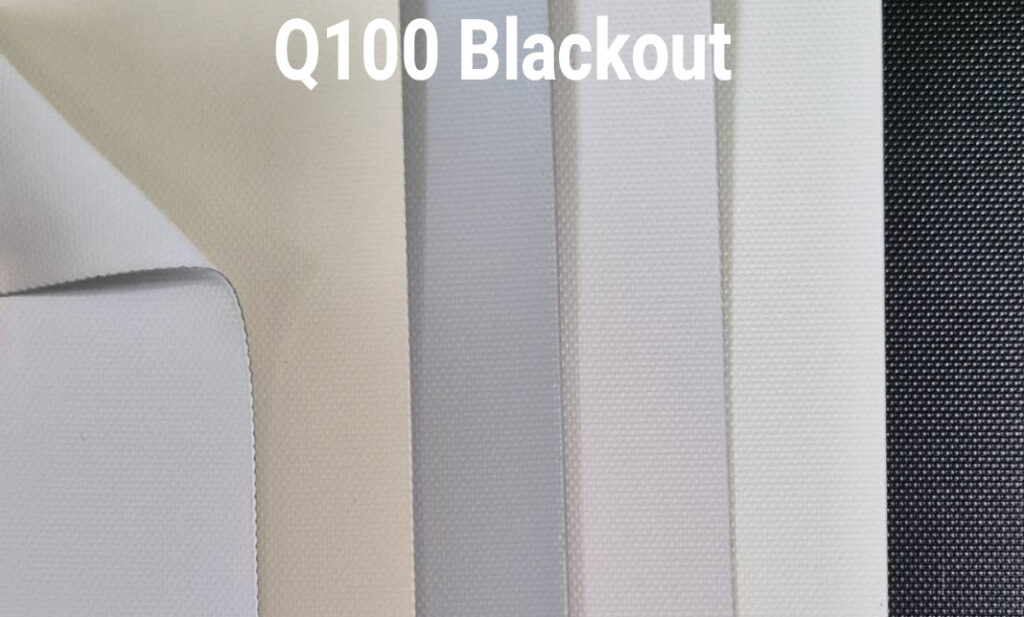
Multi-layer Coated Blackout Q100

Multi-layer Coated Blackout Q100

Starboard Design’s PVC-coated blackout range includes Q100 and Q300

2. Foam-backed decorative blackout

How it’s made:
It uses a polyester face fabric that can be printed or woven with a wide variety of patterns and textures, then backed with an acrylic foam coating so no light can pass through.

Strengths:

  • Beautiful, with many patterns and textures to choose from

  • Ideal for interiors that need both function and good looks

Limitations:

  • Less durable than multi-layer coated blackout

  • The foam backing can peel if it meets sharp objects or heavy use

  • Not waterproof, and may grow mould in damp areas

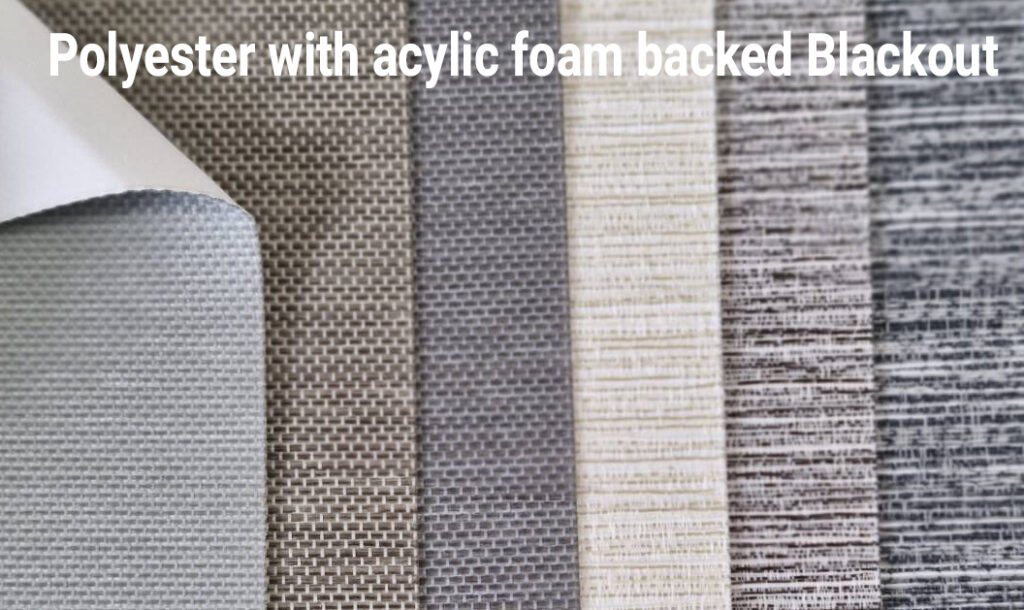
Acrylic foam backed blackout fabric

Acrylic foam backed blackout fabric

Starboard Design’s foam-backed blackout range includes Q120, Q240, Q260 and Q400

3. Starboard Design’s special sunscreen blackout

How it’s uniquely made:
It starts with the same process as sunscreen fabric — weaving fibres with a black polyester core to a very small openness, then putting it through a Shrinkage Finishing process at high temperature, which shrinks the fibres tightly until no openings remain, creating a Blackout

Strengths:

  • very dense structure that blocks 100% of light without foam or thick coatings

  • Durable outdoors and in humid areas — won’t peel or grow mould

  • Flame-retardant and dimensionally stable — won’t shrink or warp in use

Ideal for:

  • semi-outdoor areas, restaurants, showrooms, or anywhere that needs materials that stand up to the environment

  • hotel bathrooms
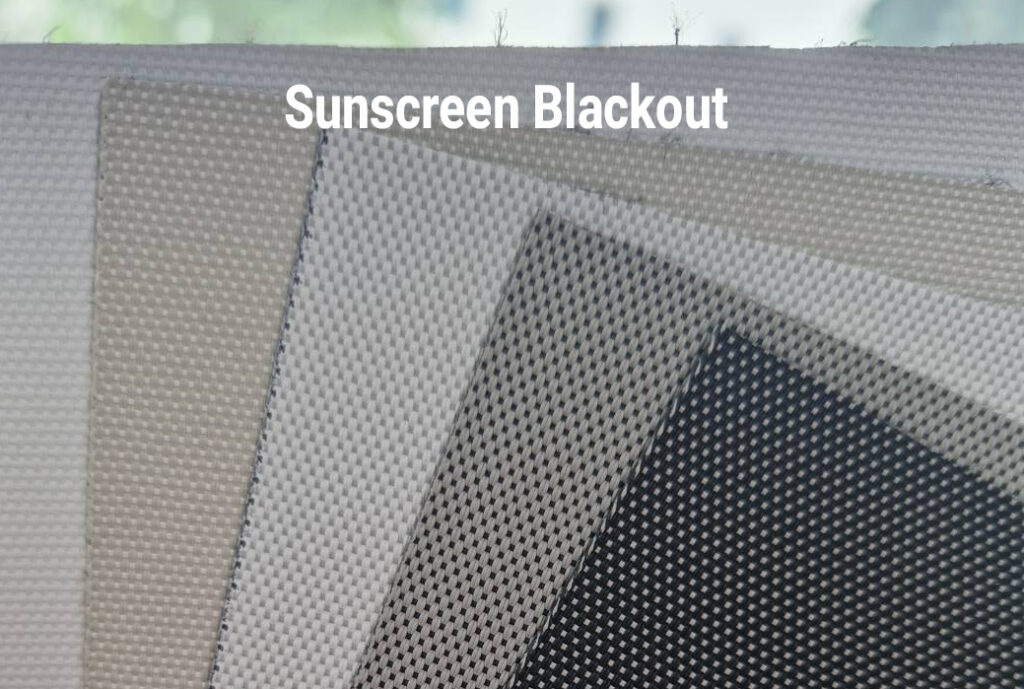
Sunscreen made blackout 100% fabric for roller blinds

Sunscreen made blackout 100% fabric for roller blinds

Starboard Design’s sunscreen blackout range includes QE900

Sunscreen 0% — the perfect choice for bathrooms

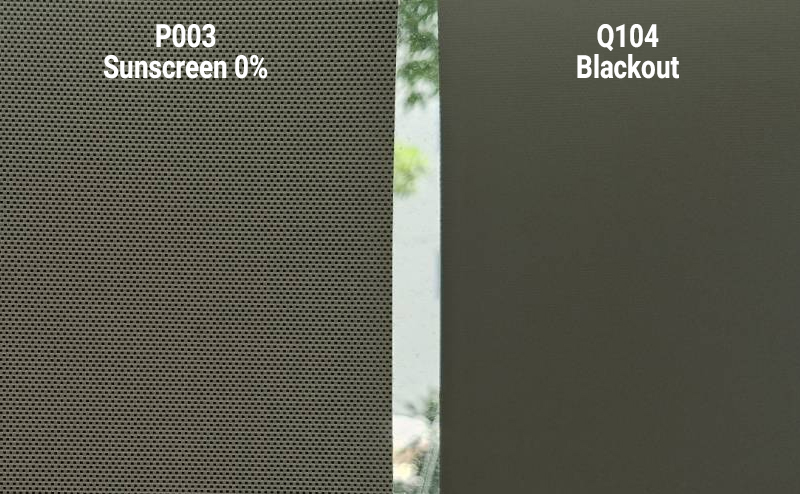
Although it blocks light and heat as well as blackout fabric does, Sunscreen 0% it has unique strengths for wet, humid areas such as bathrooms, spas or semi-outdoor spaces that don’t need total blackout darkness:

  • Waterproof won’t deteriorate even when exposed to moisture

  • Mould-resistant no mould growth on the fabric

  • 100% privacy high privacy

  • Easy to clean Long-lasting, with no colour change

  • More affordable than sunscreen blackout, with similar properties

making it a choice that is beautiful, durable and safe for hotel bathrooms and semi-outdoor projects.

Sunscreen 0% vs. blackout fabric compared

Sunscreen 0% vs. blackout fabric compared

Starboard Design’s sunscreen 0% range includes P000

Acrylic fabric — beautiful colours, sun-resistant, truly made for outdoors

The manufacturing process that makes “colour last”

What sets acrylic fabric apart from ordinary fabrics is solution-dyed acrylic fibre technology,
which means the colour is added while the fibre itself is being made (not dyed after weaving), so the colour runs right through the fibre from the start.

Advantages of this process:

  • Colours don’t fade, even after years of sun and rain

  • No peeling or blotchy patches like ordinarily dyed fabrics

  • Keeps its colour vibrant longer than any other fabric

  • Can be washed without fading

Resists tension — suited to wind, sun and rain

Acrylic fibres have a tough, flexible structure, so they handle tension, wind loads and long-term stretching well without tearing or losing shape easily.

Acrylic fabric is also:

  • water-repellent and breathable helps prevent mould

  • quick-drying, doesn’t hold moisture

  • highly UV-resistant won’t rot or turn brittle in strong sunlight

  • no mould or mustiness even when used in damp areas or near the sea

In summary: why choose acrylic fabric for outdoor use?

Because you get a fabric that is beautiful, durable and long-lasting, without frequent replacement — colours don’t fade, it doesn’t turn brittle or peel, and it looks premium throughout its life. Ideal for quality-focused projects such as holiday-home awnings, seaside restaurants or outdoor furniture that needs to be both luxurious and durable.

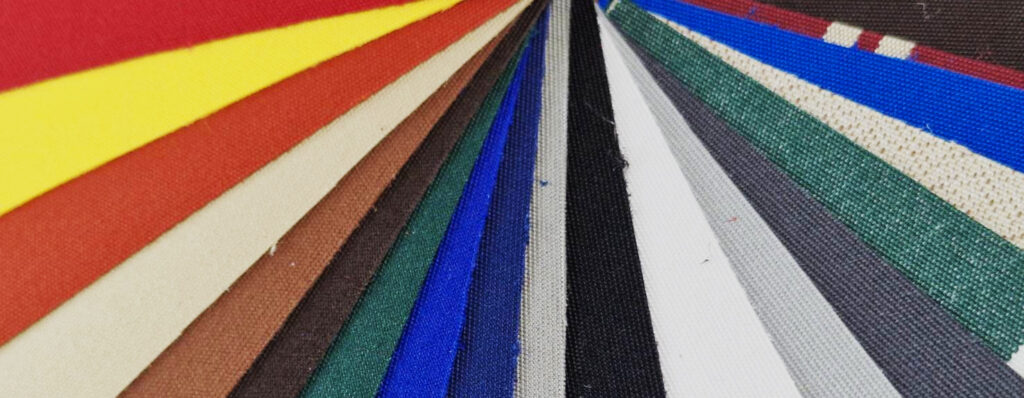
Acrylic fabric: vibrant colours that resist sun, rain and wind

Acrylic fabric: vibrant colours that resist sun, rain and wind

Starboard Design’s acrylic range includes U1000 and U2000

Fabric solutions for projects — accurate fabric matching, fast delivery, and real mock-ups

If the fabrics in our collection don’t yet meet your needs or design, Starboard Design also has expertise in sourcing and matching roller blind fabrics — both sunscreen and blackout — with access to manufacturers worldwide. So you can be confident we can match fabrics to nearly 100% of the original within 30 days, and install a full-size sample in the room Mock-up Room to project standards.

Production and installation lead time for projects is approximately 45–60 days (including made-to-measure production and on-site installation).

Note: Projects means orders with a minimum quantity of 100 units or 400 m² or more; minimums may vary depending on the fabric type and manufacturer.

If you’re not sure which fabric suits your space, the Starboard Design team is happy to advise and provide fabric samples to try in your actual space.

“Because a good fabric isn’t just beautiful — it has to work for both how you use the space and your design.”
Start typing and press Enter to search

ไทยEnglish